Illustrator, Figma
Product design
Applying UX to Industrial Safety
UX Design
Role
UX Design
Role
2023
Shipped
2023
Shipped
Research, Ideation, Prototyping, Validation
Responsibilities
Research, Ideation, Prototyping, Validation
Responsibilities
Transforming industrial safety through human-centered design.
Scaling safety through experience design
Challenges
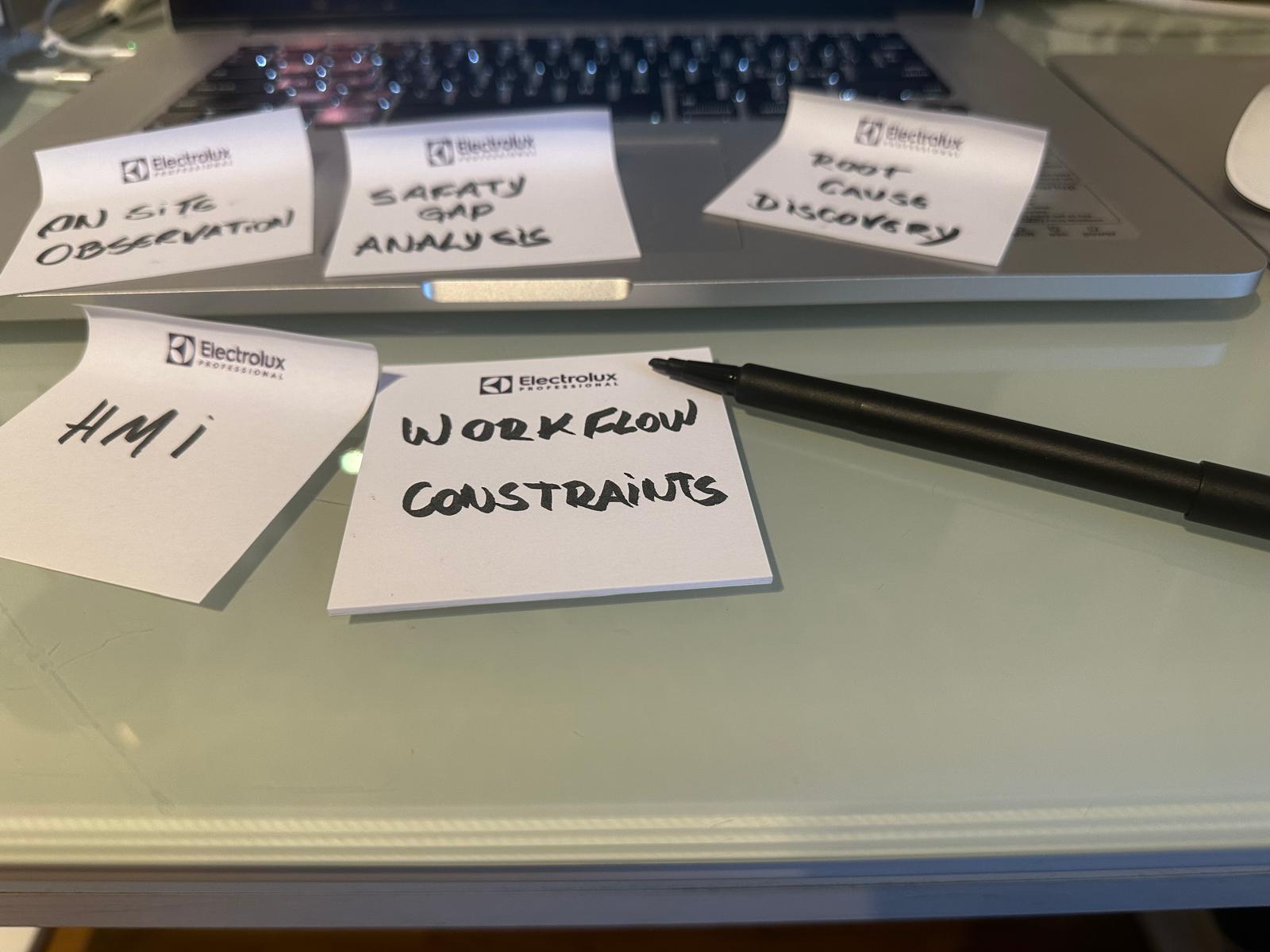
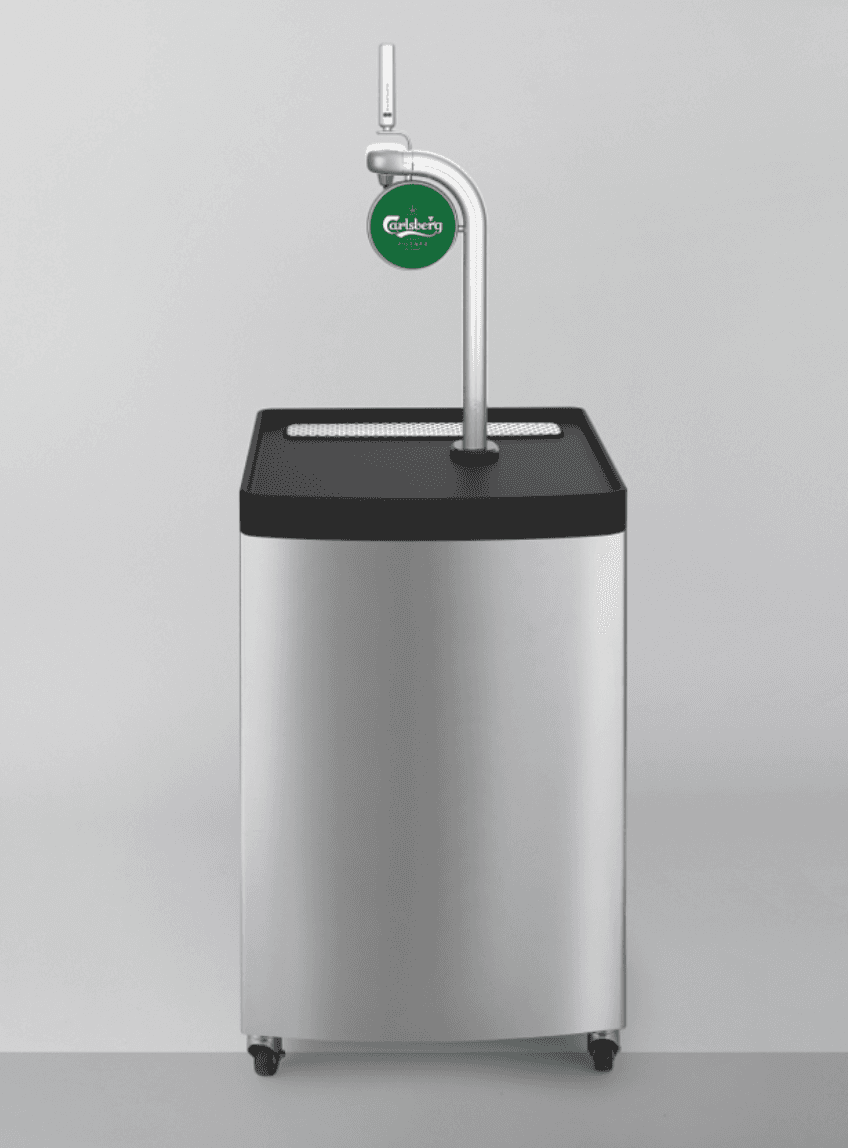
I joined Electrolux Professional to tackle a critical safety problem on the Carlsberg beer cooler production line.
For over 30 years, operators were exposed to high-temperature foam, causing recurring injuries.
High Level Goals
Our mission was to design safer human–machine interactions. We aimed to reduce behavioral risk by applying UX methodology to an industrial context, ensuring safety without impacting production flow.
The Design Process
Constraints
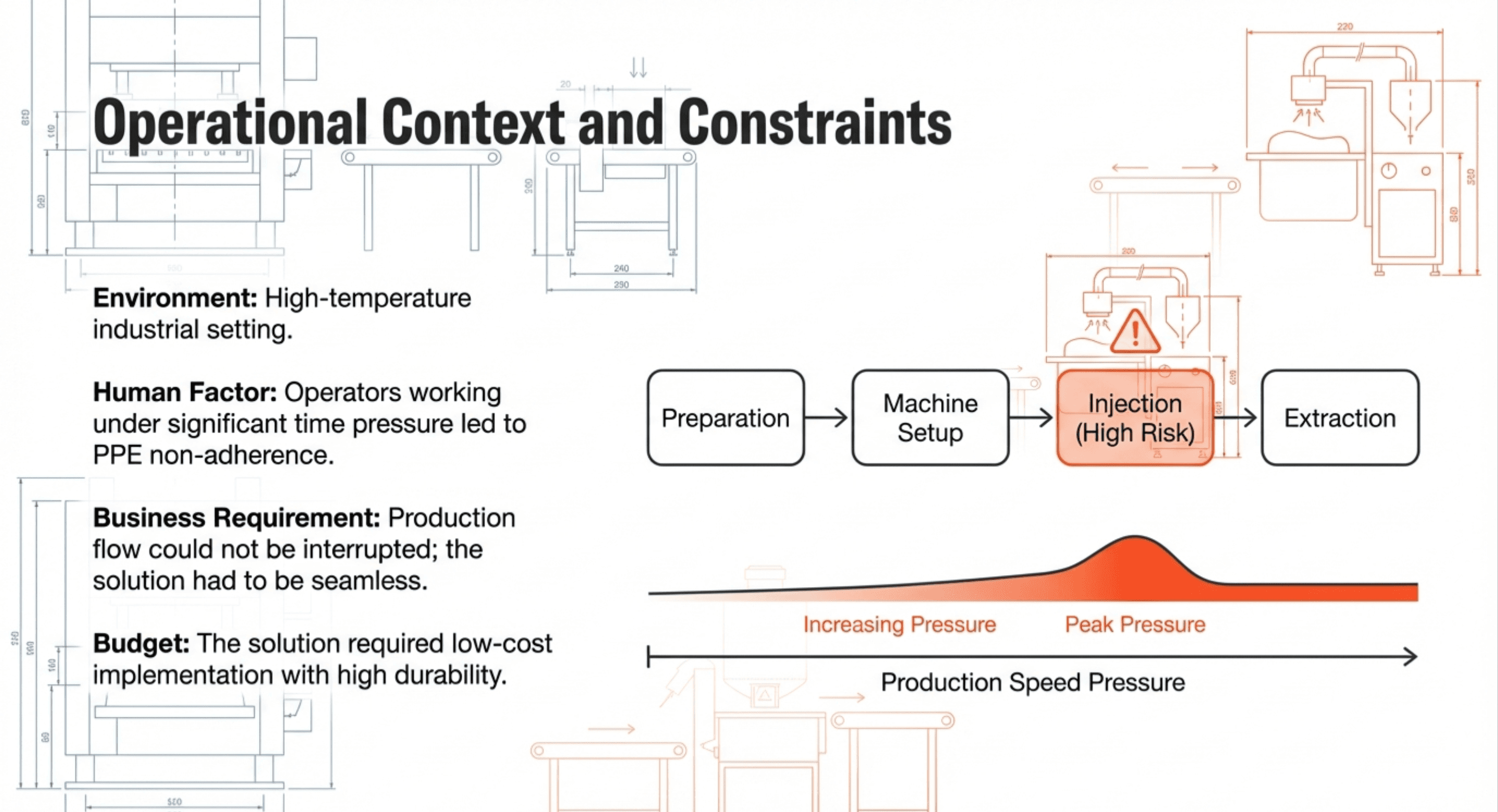
High-temperature operation and continuous manual interaction made physical separation impossible. The solution had to fit current machinery without production downtime.
The Solution
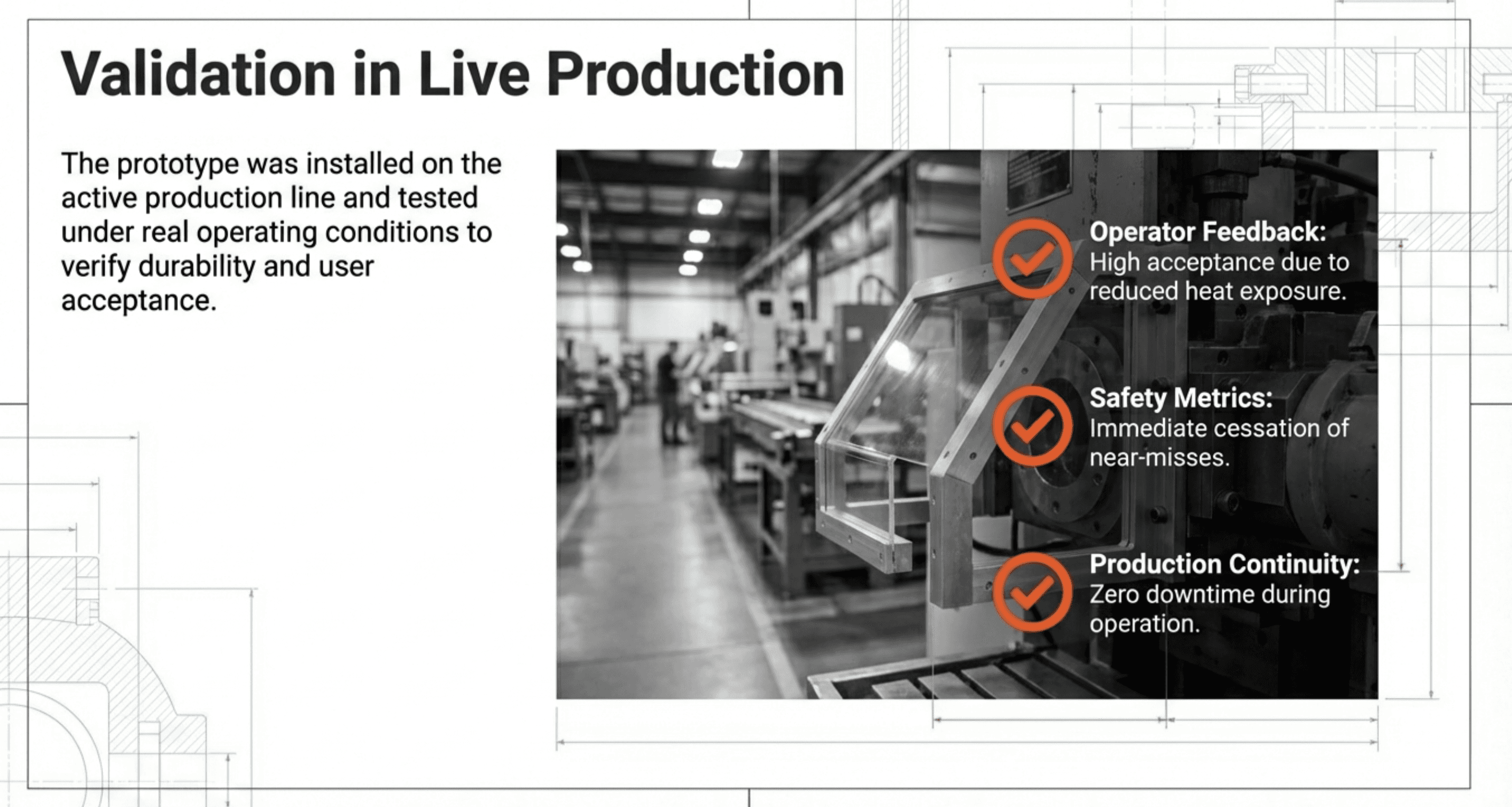
The resulting functional safety guard acts as a physical and cognitive barrier. It abstracts the complexity of high-heat zones, making the operation intuitive and significantly safer.
UX STRATEGY
Question
How might we reduce human error in high-stress production lines?
By mapping the operator's mental model during the foaming process, we identified that tactile feedback was more critical than visual alerts.
Question
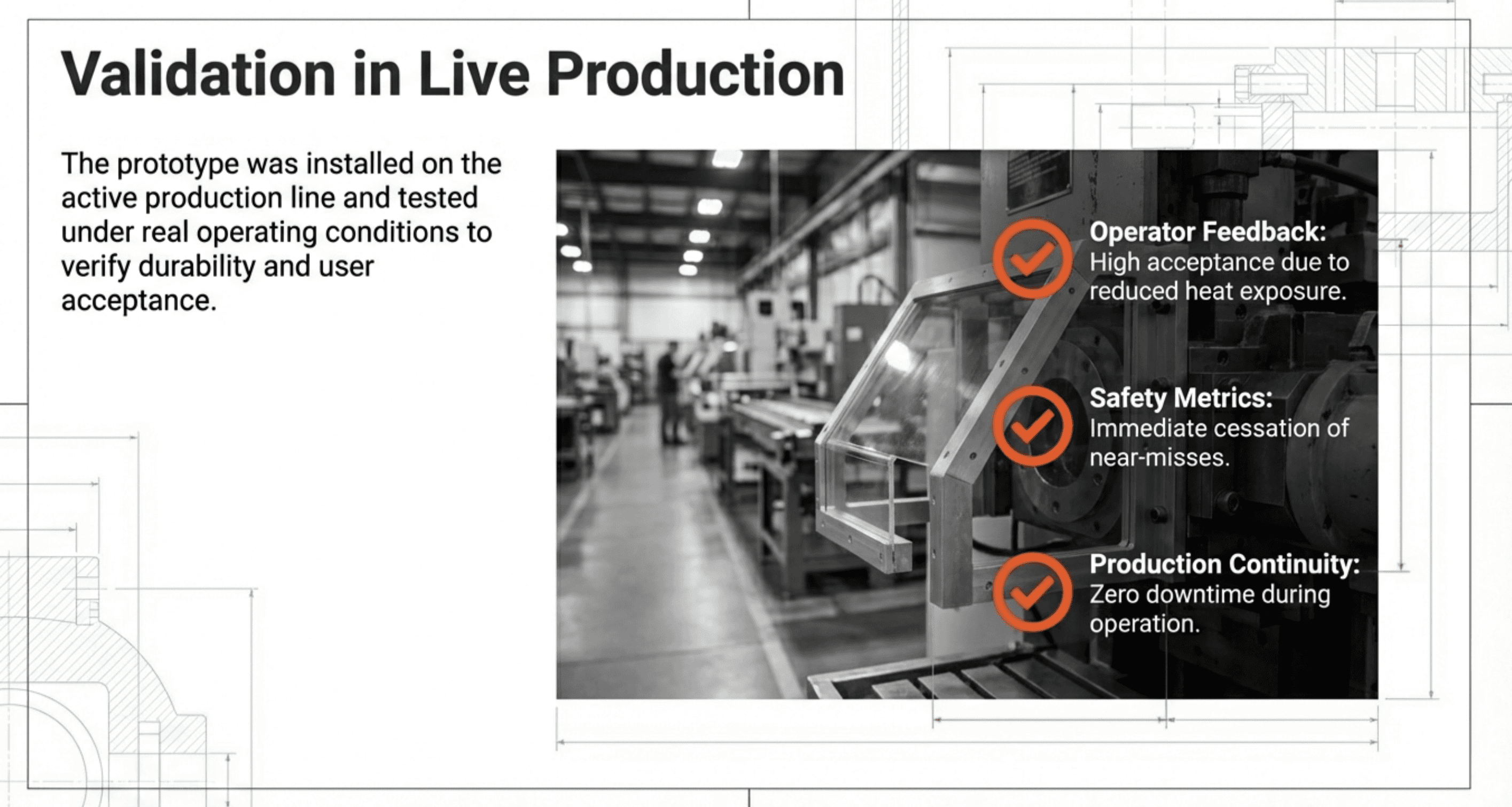
How might we validate safety solutions without stopping a 24/7 line?
We used rapid lo-fi prototyping with industrial-grade materials to run 'shadow tests' during shift changes.
Question
How might we evolve the UX mindset internally?
By presenting data-driven safety metrics alongside qualitative feedback, we bridged the gap between engineering and human-centered design.
THE
IMPACT
Injuries &
Accidents
Safety
Adherence
Operator Testimony
"For the first time in years, I feel I can focus on my job without constantly fearing a burn."
In retrospect
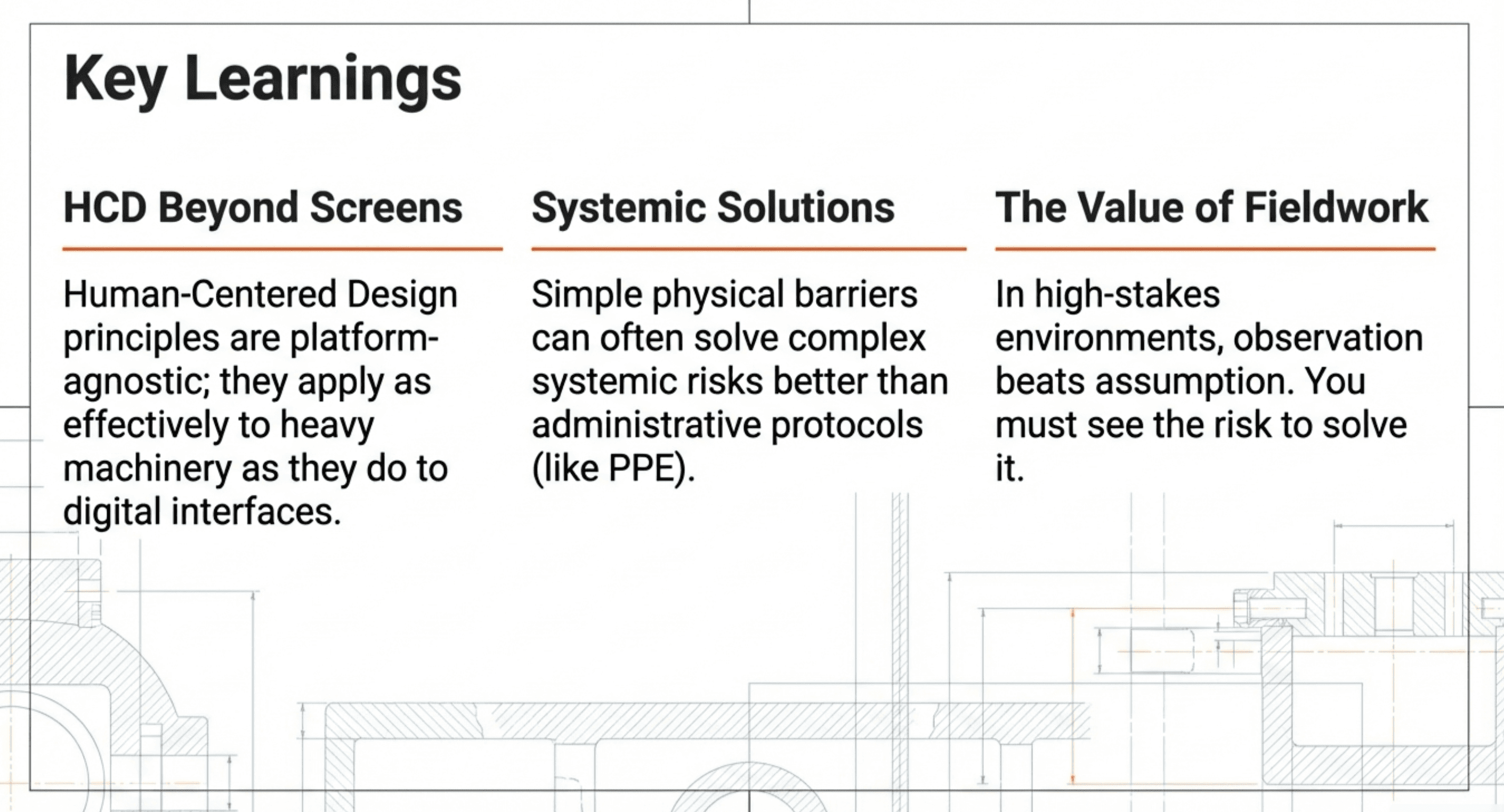
In 2023, I was able to deliver critical safety transformations that bridged the gap between human needs and industrial efficiency. Discovering how to solve systemic risks in a 24/7 production environment while fostering a UX mindset within traditional engineering teams was my greatest achievement.